Owned, financed, or leased, your panels change how buyers, lenders, and appraisers see your home.
 The owner's brief
Most sellers think of solar panels as a perk. They bring lower power bills, a modern look, and a nice line in the listing. Then a buyer's lender asks for a copy of the solar contract. Suddenly the panels are the slowest part of the deal.
That is the lease clause catch. If your system is leased or financed, a third party has rights tied to your roof. That company does not care about your closing date. It has its own forms, its own credit check for the buyer, and its own timeline. If you find this out after you go under contract, you can lose weeks. You can even lose the buyer.
The good news is that this problem is easy to solve when you start early. You need to know what kind of solar deal you have. Then you pull the right papers before the sign goes in the yard.
Every solar home falls into one of three groups, and each one sells a little differently.
Not sure which one you have? Look at your monthly bills. A payment to a solar company with a long term and no buyout in sight usually means a lease or PPA. A payment with a set payoff date usually means a loan.
"The first question I ask a seller is simple: who holds the title to the equipment?" says Marcus Delgado, residential solar advisor at Capital Energy. "Owned systems tend to move with the house. Leased systems need the solar company's sign-off, and that step is where most delays start."
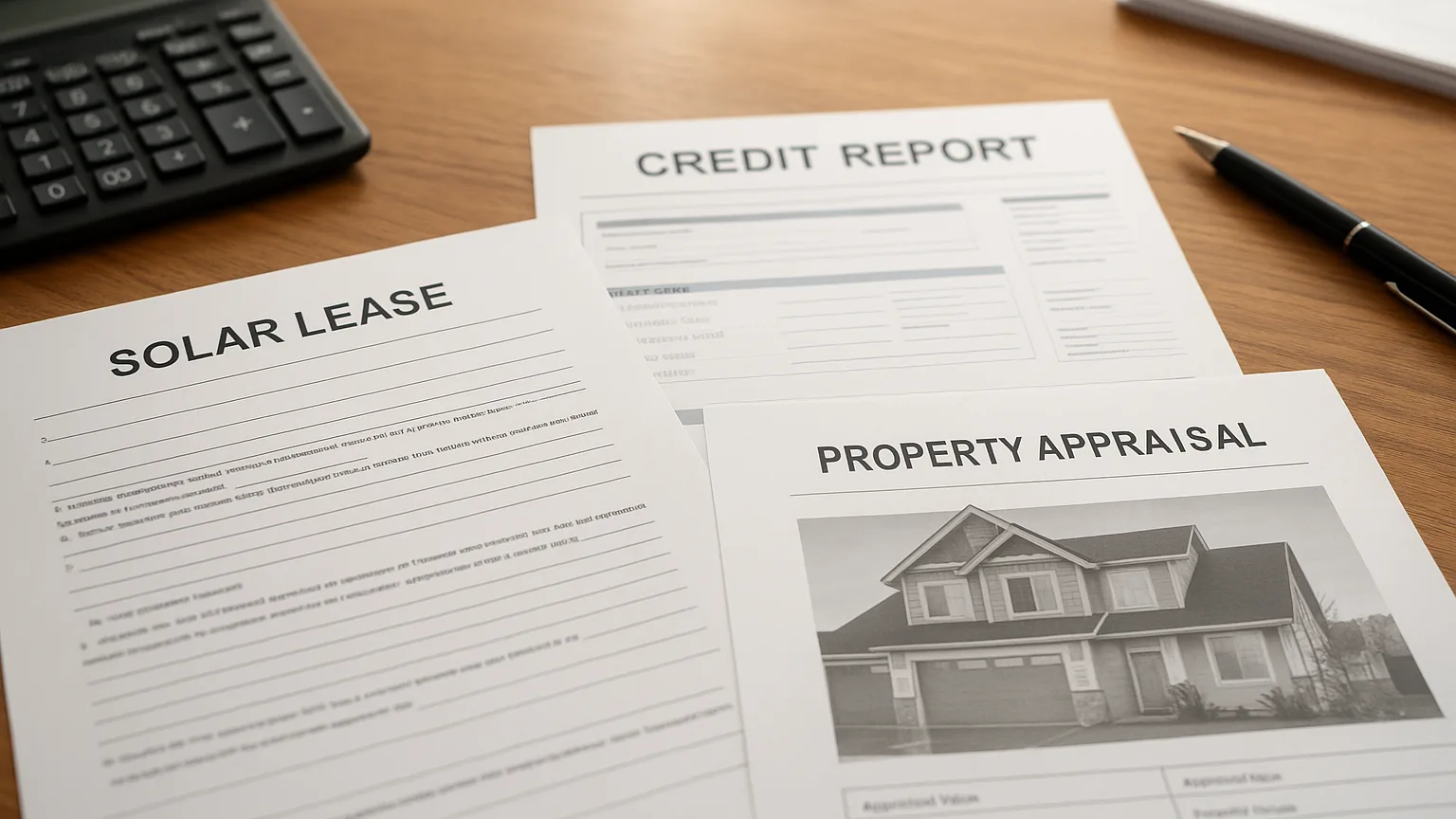
Lenders treat a leased system a lot like a car payment the buyer is taking on. The monthly lease amount gets added to the buyer's debts. A buyer who qualified easily on paper might come up short once that payment is counted.
Many loan programs also have rules about the contract itself. Lenders often want proof that leased panels are not counted in the home's value. They want to know the solar company will not block a future sale. They also want any filing on the title handled the right way. FHA and VA loans can be stricter, so expect more questions if your buyer uses one.
A cash buyer skips the lender rules but still has to deal with the solar company. Sellers comparing a cash offer or agent route should know that a leased system needs the same transfer paperwork no matter who buys.
Here is where many sellers get a surprise. An appraiser usually gives value only to panels you own. A leased system belongs to the solar company, so it adds little or nothing to the appraised price. Some appraisers even see a long lease as a small drawback, since the buyer inherits a bill.
Owned systems can add value, but only when the appraiser has proof. That means the system size, its age, and how much power it makes. “Keep the install paperwork and a year of production data in one folder, because that's what an appraiser can actually put a number on,” says Daniel Reyes, residential solar specialist at Capital Energy. Without those facts, the appraiser may treat the panels as a nice extra and move on.
This matters for your list price. When pricing a Phoenix home with solar, your agent should pull recent sales of other solar homes and note whether those systems were owned or leased. Pricing a leased home like an owned one can lead to a low appraisal and a tense round of renegotiation.
Reading about it is one thing. Seeing a real cash figure for your own address, with the repair math laid out line by line, is usually what settles the decision. Plenty of owners use our number as a floor and then test the open market against it.
Solar companies process transfers at their own pace. Two to six weeks is common, and some take longer when the buyer's credit needs a closer look. A typical escrow in the Phoenix area runs about 30 days. You can see the problem. If the transfer starts the week you go under contract, it may not finish before your closing date.
Call your solar provider before you list. Ask for the transfer packet, the current payoff amount, and the steps a new owner must take. Some companies let you start parts of the process early, which saves real time later.
Buyers in the desert also ask who installed the system and how it has held up through summer. A clean warranty and a known installer ease those worries, especially for buyers who have already read up on which installers handle Arizona heat before touring homes.
Some buyers simply do not want a solar contract. That does not have to end the deal. You can buy out the lease and sell the panels as owned. You can prepay the rest of the lease so the buyer gets the power with no monthly bill. In rare cases, you can have the system removed, though removal fees and roof repairs can be steep. Each choice costs money, so get real numbers from your provider before you negotiate.
Disclosure still applies in every case. Even sellers who plan on selling as is in Phoenix must tell buyers about a solar lease or lien. Leaving it out does not make it go away. It just shows up during the title search, at the worst possible moment.
Solar panels can be a real selling point, but only when everyone knows who owns them. Owned systems usually add value with good records. Financed systems need a clean payoff. Leased and PPA systems bring a third party into your sale, with its own credit checks, forms, and timeline. Lenders count that lease as buyer debt, and appraisers rarely give it any value, so your price and your plan need to reflect that.
The fix is simple: start early. Call your solar provider before you list, build your solar file, and know your buyout and prepay numbers ahead of time. Disclose everything up front. When the paperwork is ready on day one, the panels stop being the slow part of the deal and go back to being what they should be, a reason buyers fall for your home.
Kim's Properties has bought homes across Phoenix, Scottsdale, Mesa and the rest of the Valley for more than a decade. Call the office on 24th Street or send a few details online, and you will hear back from our team, not a call center.