It is glossy, it is genuinely tough, and it is the most oversold surface in home improvement. A straight account of where epoxy fails and who should still buy it anyway.
 The owner's brief
Nobody has ever regretted an epoxy floor in year one. That is the trouble with it. The stuff goes down looking like the floor of a showroom, the neighbours comment, and for a couple of seasons you feel like you found the one home improvement that pays for itself in pure satisfaction. The regret, when it arrives, arrives on a schedule, and the schedule is usually somewhere between year three and year seven.
None of which makes epoxy a bad product. It makes it a misunderstood one. Epoxy is an industrial coating that got repackaged as a consumer upgrade, and most of what goes wrong with it in a residential garage traces back to that translation. The failures are predictable, the causes are known, and knowing them ahead of time is the difference between a floor that lasts fifteen years and one you are chipping off with a rented grinder before the car loan is paid.
If you want the whole list before the explanations, here it is:
Everything else on that list is an annoyance. Peeling is the one that means the floor is over.
Concrete is not waterproof and a slab is not sealed off from the ground beneath it. Water vapour moves up through it constantly. On an uncoated slab that vapour simply evaporates into the garage and nobody notices. Put an impermeable coating on top and the vapour has nowhere to go, so it collects at the boundary between the epoxy and the concrete and pushes. Eventually it wins. You get bubbles, then a soft spot, then a corner you can lift with a fingernail, then a sheet.
People assume a dry climate means a dry slab, and it is not that simple. A great many Valley homes sit on slabs poured without an adequate vapour barrier, and irrigation, pool backwash and monsoon saturation all push moisture into the soil under the garage in concentrated bursts. A slab can be bone dry in May and actively wet in August.
The fix is not complicated and it is skipped constantly. Tape a two foot square of plastic sheeting to the slab, seal all four edges, leave it twenty four hours, and look at the underside. Condensation means you have a moisture issue and a standard epoxy will fail. That test costs four dollars and about a day. Skipping it is how most failed floors begin.
Standard epoxy is not ultraviolet stable. Sun exposure breaks down the resin, and the visible result is ambering: a white or light grey floor gradually shifting to a dull beige, worst in the strip nearest the garage door where the afternoon sun reaches under.
It is not a cleaning problem. The colour change is in the material. A polyaspartic or polyurethane topcoat slows it considerably and is worth paying for, but marketing that promises a coating will never yellow is overselling. In a garage where the door spends a lot of the day open, expect visible change.
Tires get hot. They also get soft and slightly tacky, and they expand. Pull a car into a garage after a summer drive and the tire sits on the coating while both cool and contract. If the bond between epoxy and concrete is anything less than excellent, the tire wins and lifts a patch of coating away with it when you next reverse out.
This is the single most common complaint about DIY kits, and it is close to a guarantee if the concrete was not properly profiled first. In a climate where asphalt reaches surface temperatures well above anything a tire was designed for, the margin is thinner than the product literature suggests.
Reading about it is one thing. Seeing a real cash figure for your own address, with the repair math laid out line by line, is usually what settles the decision. Plenty of owners use our number as a floor and then test the open market against it.
An epoxy floor is roughly ten percent coating and ninety percent preparation, and preparation is exactly where quotes diverge.
The concrete must be mechanically profiled, which means diamond grinding or shot blasting, not acid etching from a bucket. Every oil stain has to be drawn out with a degreaser first, because epoxy will not bond through oil and it does not need much. Cracks and spalling need patching with a compatible filler. Then the whole thing needs to go down inside a fairly narrow window of temperature and humidity, which in Phoenix means most of the summer is off the table.
When a cut price quote comes in dramatically under everyone else, the savings are in that list. It is not a better deal, it is a shorter warranty.
High gloss epoxy with any water on it is genuinely slippery, and garages get wet from rain running off a car, from washing one, from a water heater that starts weeping. Anti slip aggregate broadcast into the topcoat fixes this properly, and it costs very little, but it slightly dulls the mirror finish so people routinely decline it. That is a poor trade in a room where you are usually carrying something in both hands.
Concrete is a one way street here. Once epoxy is bonded to it, removal means grinding, which means a rented machine, days of work, a serious quantity of dust and a slab that will need resurfacing before it looks acceptable again. Removal frequently costs more than the original installation.
This matters most when a floor fails partially. A garage with two peeled patches and a yellowed strip cannot be spot repaired convincingly, because new coating will not match aged coating. You are choosing between living with it and stripping the whole thing.
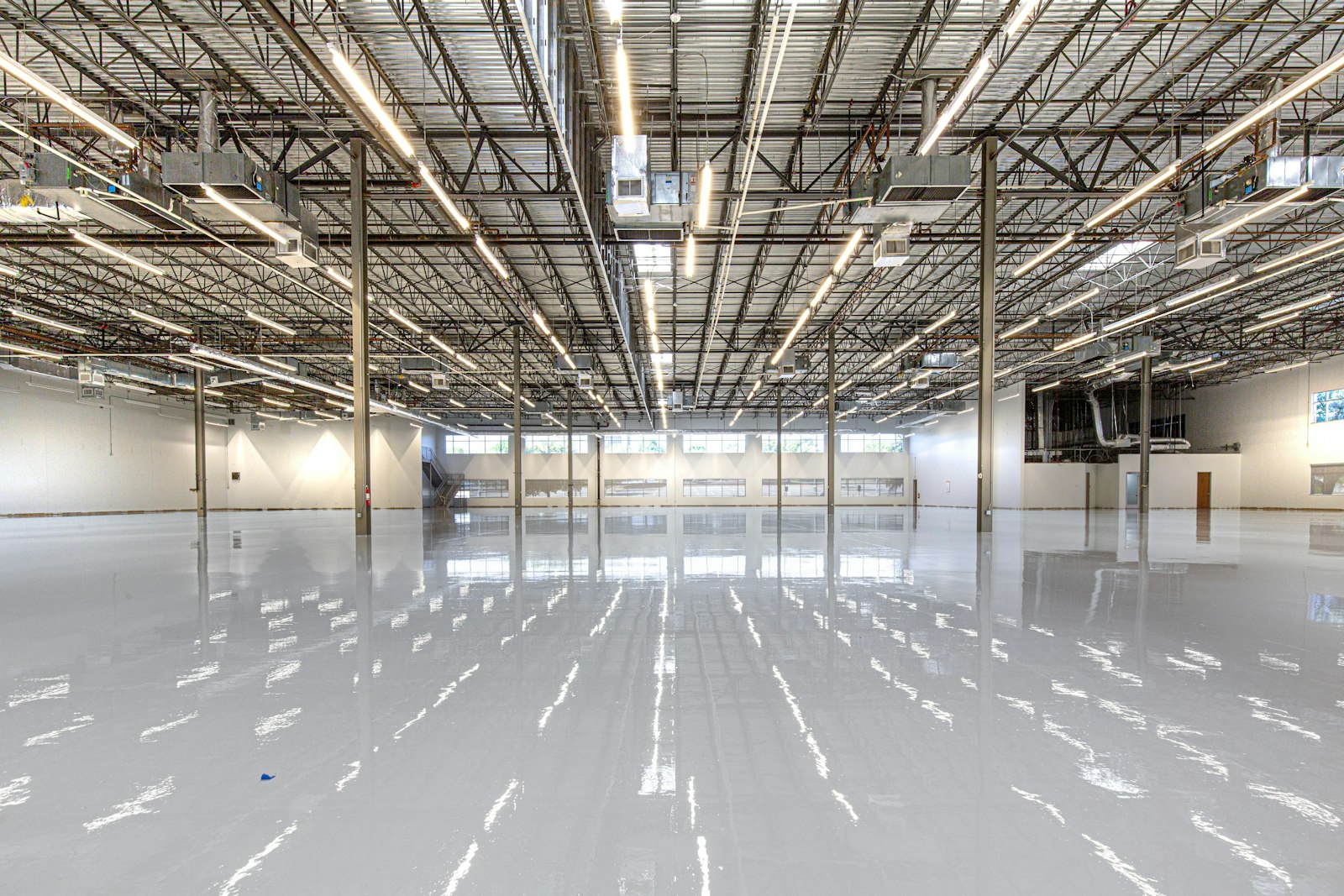
All of which is not an argument against it. It is an argument for buying it with clear eyes. In a garage with a proven dry slab, professionally ground concrete, a polyaspartic topcoat, anti slip aggregate and a door that is not open all afternoon, epoxy is superb. It resists oil, brake fluid and battery acid, it sweeps clean in minutes, it brightens a dark space considerably, and it holds up to real use for a very long time.
Workshops, home gyms and garages that function as usable rooms are where it earns its money. If the alternative is bare, stained, dusting concrete, a properly installed epoxy floor is a large improvement and it will still look good in a decade. The people who end up disappointed are almost always the ones who bought the cheapest version of a product whose entire performance lives in the preparation.
An intact epoxy floor is a mild positive. It photographs well, it suggests the garage has been cared for, and buyers like walking into a clean bright space. It does not add meaningful appraised value, because a garage floor is not a valued component the way a roof or an HVAC system is.
A failing epoxy floor is a real negative, and it costs more than the repair would. Peeling grey patches read as deferred maintenance, and buyers generalise from what they can see to what they cannot. A garage that looks neglected makes people wonder what else was neglected, and that suspicion gets priced into the offer at a rate well above the actual cost of fixing the floor.
The honest summary is that epoxy is a good product with a narrow set of conditions and an industry that does not much like discussing them. Test the slab for moisture before anything else. Pay for real mechanical preparation or do not do it at all. Take the topcoat and take the anti slip. And accept that in this climate, a floor near a west facing door will change colour no matter what anyone promises you.
If you are looking at a garage floor as one line on a longer list of things standing between you and a sale, add up that list honestly before you start. Coatings, paint, landscaping and small repairs have a way of consuming a whole season and a large amount of money without moving the final number as much as owners expect. We buy Phoenix area houses in whatever condition they are in, peeling garage floor and all, with no repairs and no cleanup asked of you. You can see how that works or get an offer and compare it against what the repair list would really cost you.
Kim's Properties has bought homes across Phoenix, Scottsdale, Mesa and the rest of the Valley for more than a decade. Call the office on 24th Street or send a few details online, and you will hear back from our team, not a call center.